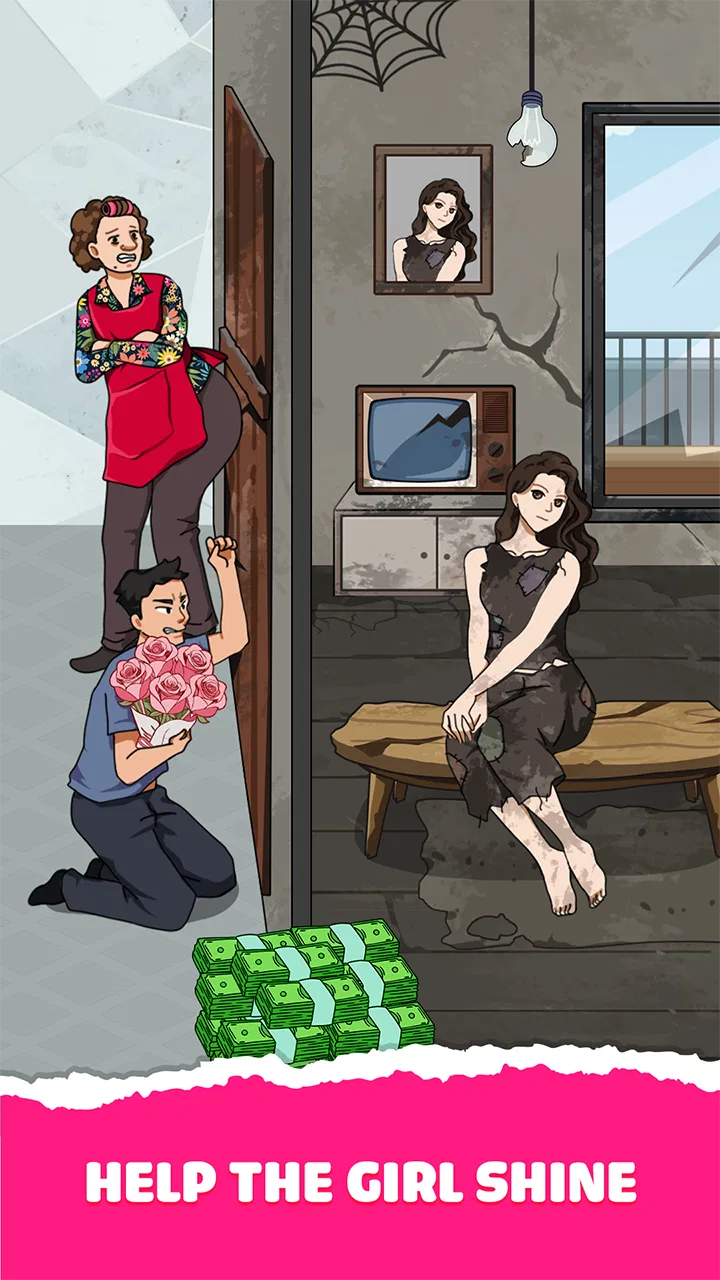
Tricky Prank: Brain Quest
- 4.6
- Rating
- 10.00M
- Installs
- Free
- Price

 Analysis by App-foxy
I spent time with Tricky Prank: Brain Quest expecting a light puzzle game, and that is exactly where it fits best: short challenges built around noticing clues, questioning the obvious answer, and dealing with prank-style situations. It is a free game from HIGAME Studio in the puzzle category, aimed at Everyone, so its basic appeal is easy to understand. You are not entering a long story campaign or a serious brain-training course. You are opening a collection of playful problems designed to make you pause, inspect the scene, and try a less predictable solution.
That simple idea gives it a useful place on a phone. I can imagine playing it while waiting for an appointment, taking a quick break, or handing it to someone who enjoys solving visual riddles without committing to a large game. The important distinction is that its entertainment comes from the trick in each situation, not from deep strategy or a complicated progression system. If you like puzzles that make you say, “I should have noticed that,” this is likely to feel inviting. If you prefer carefully structured logic problems with one rigorous path, the prank format may feel too loose.
How the free model affects the experience
The most important cost detail is straightforward: the game is free to access. That makes it easy to test without deciding whether a purchase is justified first. There are also in-app purchases priced from $0.99 to $9.99 per item. I would therefore treat the free download as a chance to judge the pacing and puzzle style for yourself, rather than assuming that every part of the experience has the same value without spending.
You May Also Like

 Blood Strike: 2.5 Anniversary
Blood Strike’s Loadouts Turn Every Drop Into a Tactical Gamble
A close look at Blood Strike’s custom loadouts: how fast access to signature weapons reshapes its battle royale rhythm, rewards preparation, and narrows the gap between fights.

 Pandora - Music & Podcasts
Pandora’s Music Is Easy to Start, but Harder to Recover
Pandora’s strength is its low-effort path from a seed to a station. Its weak spot is how much confidence it asks you to place in connection, setup, and quiet recovery.

 8 Ball Pool
 Is Built on Rivalries, Rematches, and Routine
A close look at the rivalries, rematches, shared routines, and unanswered safety questions that turn a quick pool match into a persistent mobile community.

 Samsung Music
’s Quiet Strength Is Playing What You Already Own
Its reach comes less from spectacle than from dependable access to a personal library. That simplicity is both the app’s strongest retention engine and its ceiling.

 AccuWeather: Weather Radar
AccuWeather Review: A Quick, Clear Forecast for Everyday Decisions
For everyday plans, the best forecast is the one you can understand quickly. AccuWeather makes rain timing, radar, and local conditions easy to act on, with a few trade-offs.

 Hill Climb Racing
Why Hill Climb Racing Still Turns Crashes Into One More Run
A tiny car, a bumpy hill and one more upgrade: Hill Climb Racing keeps resurfacing because its simple chaos makes every near-miss feel personal.
More From Our News Desk



That distinction matters with a casual puzzle game. A free starting point is valuable when you want something for occasional use, especially because this type of challenge does not require a large time investment before you know whether the humor and trick design suit you. On the other hand, anyone who dislikes optional spending prompts should pay attention to how the game feels during play and decide in advance whether they are comfortable remaining within the free portion.
I would not describe the purchase range as a reason to buy automatically. The sensible approach is to begin without spending, learn whether the puzzles remain enjoyable when you solve them at your own pace, and only then consider an item if it genuinely improves your experience. In other words, the free access carries the initial value; the paid side should be judged by how much it adds to your personal use rather than by the existence of the option alone.
The game is available for devices running Android 7.0 or later, which keeps the technical entry point relatively broad for Android users. Its current version is 1.1.8. I still recommend checking your device before installing, particularly if you use an older phone, because compatibility and comfort are different questions. A game can run and still feel less pleasant on a small or slower screen when a puzzle depends on careful visual inspection.
The kind of thinking the puzzles encourage
What I like about the concept is that it rewards a change of attitude. In a conventional puzzle, I usually search for a pattern, calculate a sequence, or arrange objects according to a rule. Here, I expect the scene itself to be misleading. The obvious action may be a distraction, while a small visual clue points toward the actual solution. That makes the game less about speed and more about resisting the first interpretation.
My most useful habit was to inspect the whole screen before tapping repeatedly. I looked at the characters, objects, empty spaces, and anything that seemed oddly placed. This is a small adjustment, but it changes the experience from random tapping into a deliberate search. When a puzzle appears impossible, I would first ask what the scene is trying to make me assume. That question is more useful here than simply trying every visible object in sequence.
Another practical tip is to separate observation from action. I would spend a few seconds identifying what appears normal, what looks exaggerated, and what might be part of the prank. Then I would test one idea at a time. This makes wrong attempts informative instead of chaotic. It also helps when playing with another person, because you can explain why you are testing a clue rather than arguing over a series of guesses.
The format works particularly well for shared play. I can see two people passing a phone back and forth, with one person spotting a detail and the other trying the interaction. It is also suitable for a younger player who enjoys visual surprises, although an adult may still need to help when a solution depends on interpreting an indirect clue. The Everyone rating makes the game approachable for a broad audience, but an age label does not guarantee that every player will enjoy the same level of ambiguity.
Where it fits among puzzle alternatives
Compared with a traditional crossword, number puzzle, or match-based game, this title asks for a different kind of attention. It is less about building a long chain of correct decisions and more about uncovering the intended joke or twist in a single situation. That makes it easier to play in short bursts, but it may also provide less satisfaction for someone who wants a deep system that keeps expanding with mastery.
It also differs from a pure brain-training app. I would not choose it primarily to measure concentration, memory, or calculation. The puzzles are presented as playful challenges, so the reward is the moment of recognition and the amusement of being misdirected. If you want a calm routine with repeatable exercises and clear performance tracking, another category of app would be a better match.
Against story-heavy adventure puzzles, the appeal is immediacy. You can approach a challenge without learning a large cast or remembering a long plot. The trade-off is that the emotional investment may be lighter. I would choose this game when I want a quick mental diversion, not when I am looking for a world to explore over many evenings.
That comparison also explains why the game may divide players. Some people enjoy being tricked because the reveal feels funny. Others see an unexpected solution as unfair if the clue was too subtle. In my experience, the difference comes down to tolerance for trial and error. If you want every answer to follow a clearly stated rule, the prank structure could be frustrating. If you enjoy questioning the rules of the scene itself, it is much more appealing.
Everyday situations where it works best
My favorite use case is a short waiting period when I want more involvement than scrolling but less commitment than starting a full game. A few puzzle attempts can fill that gap without requiring a quiet room or a long session. The same quality makes it useful during a commute break or while relaxing before bed, provided you are comfortable with the possibility that a teasing puzzle may be more stimulating than soothing.
It can also work as a casual conversation starter. I would show a puzzle to a friend and ask what they notice first, then compare approaches. That is more enjoyable than silently rushing through every challenge, because the game’s central idea is the difference between what looks important and what actually matters. The social value comes from discussing the trick, not from competing over a score.
For parents or relatives choosing something approachable for a child, I would play alongside the child at first. The game’s broad age rating is reassuring, but a young player may interpret a prank differently from an adult or become stuck when the solution is intentionally indirect. Turning the puzzle into a shared observation exercise can make the experience less about failure and more about learning to inspect details.
It is less suitable for a long flight or an offline-focused trip if you need guaranteed access to a large amount of content, because I would want to confirm how the particular device and installation behave before relying on it as the only entertainment. I also would not select it for a serious group puzzle night where everyone expects carefully balanced logic. Its charm is casual surprise, not formal competition.
Small habits that make solving less frustrating
When I get stuck, I avoid tapping everything immediately. Random interaction can sometimes reveal a response, but it does not teach me how the puzzle is constructed. Instead, I check whether the apparent goal is itself a decoy, then inspect objects that seem decorative or strangely positioned. This approach preserves the satisfaction of finding the clue and reduces the feeling that success came from luck.
I also recommend changing the way you describe the problem. Rather than asking, “How do I complete the obvious task?” I ask, “What is the prank trying to hide?” That wording encourages lateral thinking without requiring complicated theory. It is a particularly useful method when playing with a child, because it turns an apparently impossible level into a simple search for the misleading assumption.
Another trade-off is patience. A player who wants quick confirmation may find the game irritating when the intended interaction is not immediately clear. I would take a short break instead of repeating the same action many times. Returning with fresh attention often works better for visual puzzles than forcing the issue, and it keeps the experience from turning a casual game into a source of unnecessary annoyance.
These habits also reveal the game’s limitation: the quality of a puzzle depends heavily on how clearly its clue can be recognized after the reveal. A clever misdirection feels rewarding when the answer seems fair in hindsight. It feels arbitrary when there is no meaningful way to infer it. That is the main standard I would use while deciding whether to continue. The free entry makes that test easy to perform without financial commitment.
Who is likely to get the most value
I think the strongest audience is anyone who enjoys short, visual, surprise-based puzzles and does not mind experimenting. It is a good fit for casual players, families looking for a light shared activity, and people who want something more interactive than passive phone use. The free price also makes it practical for someone who is simply curious about this style and wants to decide through direct experience.
It may also suit players who enjoy discussing solutions. Because the fun often comes from the hidden assumption, explaining a completed puzzle to another person can be almost as entertaining as solving it. I would especially recommend it to friends who like comparing first impressions, since the prank design gives each person a reason to look at the same scene differently.
I would be more cautious about recommending it to players who need predictable rules, substantial strategic depth, or a strong narrative reason to keep going. A dedicated logic-puzzle fan may prefer a game where every clue is explicit and the challenge grows through a carefully measured system. Someone who dislikes hints, retries, or unexpected interactions may also find the central gimmick tiring rather than funny.
Storage and performance expectations should be sensible for a mobile puzzle game, but I would still avoid installing it on a device where screen visibility is poor. Tiny visual distinctions are harder to judge when the display is dim, cracked, or crowded with distractions. Playing with the screen clean and the brightness comfortable can make a real difference in a title where noticing an unusual detail is often the whole challenge.
My verdict on downloading or skipping
With an average rating of 4.6 from around 77 thousand ratings and more than 10 million installs, the game has clearly reached a substantial audience. Those figures do not replace personal taste, but they do suggest that the prank-puzzle formula has broad appeal. HIGAME Studio has positioned it as an accessible, free mobile game rather than an expensive specialist release, and that is the right way for me to approach it.
I would download it if I wanted a friendly puzzle diversion that can be played in small sessions and shared with someone nearby. The strongest reason to try it is not complexity; it is the pleasure of spotting the clue behind a deliberately misleading situation. I would start with the free experience, decide whether the puzzle logic feels fair to me, and keep spending optional rather than treating in-app purchases as part of the basic requirement.
I would skip it if my priority were rigorous deduction, long-term strategic progression, or a polished narrative adventure. Those expectations point toward other puzzle formats that offer clearer systems and more sustained development. This game is at its best when I am willing to be surprised, make an occasional wrong guess, and enjoy the reveal instead of demanding that every challenge behave like a textbook exercise.
Overall, Tricky Prank: Brain Quest earns my recommendation as a low-commitment puzzle game with a clear personality. Its free access lowers the risk of trying it, its Everyone rating broadens its audience, and its visual misdirection gives ordinary waiting time a bit more energy. The main question is whether you enjoy being led away from the obvious answer. If you do, it is worth installing and exploring without rushing to spend; if you do not, the same prank-based design will probably be the reason you remove it.
FAQs for Tricky Prank: Brain Quest
01What is Tricky Prank: Brain Quest about?
Tricky Prank: Brain Quest is a brain-teasing puzzle game designed to challenge your logic and creativity. It offers a variety of levels where players must solve quirky and unconventional puzzles. Each level presents a unique scenario that requires thinking outside the box to find the solution, making it a fun and engaging experience.
02Is Tricky Prank: Brain Quest suitable for all age groups?
Yes, Tricky Prank: Brain Quest is designed to be suitable for players of all ages. Its colorful graphics and playful scenarios are appealing to both kids and adults. However, some puzzles may require more advanced problem-solving skills, making it a great game for families to enjoy together.
03Are in-app purchases required to progress in Tricky Prank: Brain Quest?
While Tricky Prank: Brain Quest is free to download and play, it does offer optional in-app purchases. These purchases can include hints or additional content to enhance the gameplay experience. However, players can progress through the game without making any purchases by using their problem-solving skills and creativity.
04Does Tricky Prank: Brain Quest require an internet connection?
Tricky Prank: Brain Quest can be played offline, allowing players to enjoy the game without an internet connection. This makes it a great option for on-the-go entertainment. However, an internet connection may be required for downloading updates or accessing certain features like in-app purchases.
05How does the hint system work in Tricky Prank: Brain Quest?
The hint system in Tricky Prank: Brain Quest is designed to assist players who are stuck on a particular puzzle. Players can access hints to get a nudge in the right direction. Hints can be earned through gameplay or purchased via in-app purchases, providing flexibility in how players choose to use them.
Pros
- Engaging puzzles stimulate creative thinking.
- User-friendly interface enhances gameplay.
- Regular updates with new challenges.
- No intrusive ads interrupting gameplay.
- Offline mode available for on-the-go fun.
Cons
- Some levels are too easy for experienced players.
- Limited hints can frustrate some users.
- Occasional bugs affect game performance.
- In-app purchases for additional content.
- Graphics are basic compared to competitors.

Tricky Prank: Brain Quest
Gallery